Gilbert, AZ, April 26, 2020 at 17:09
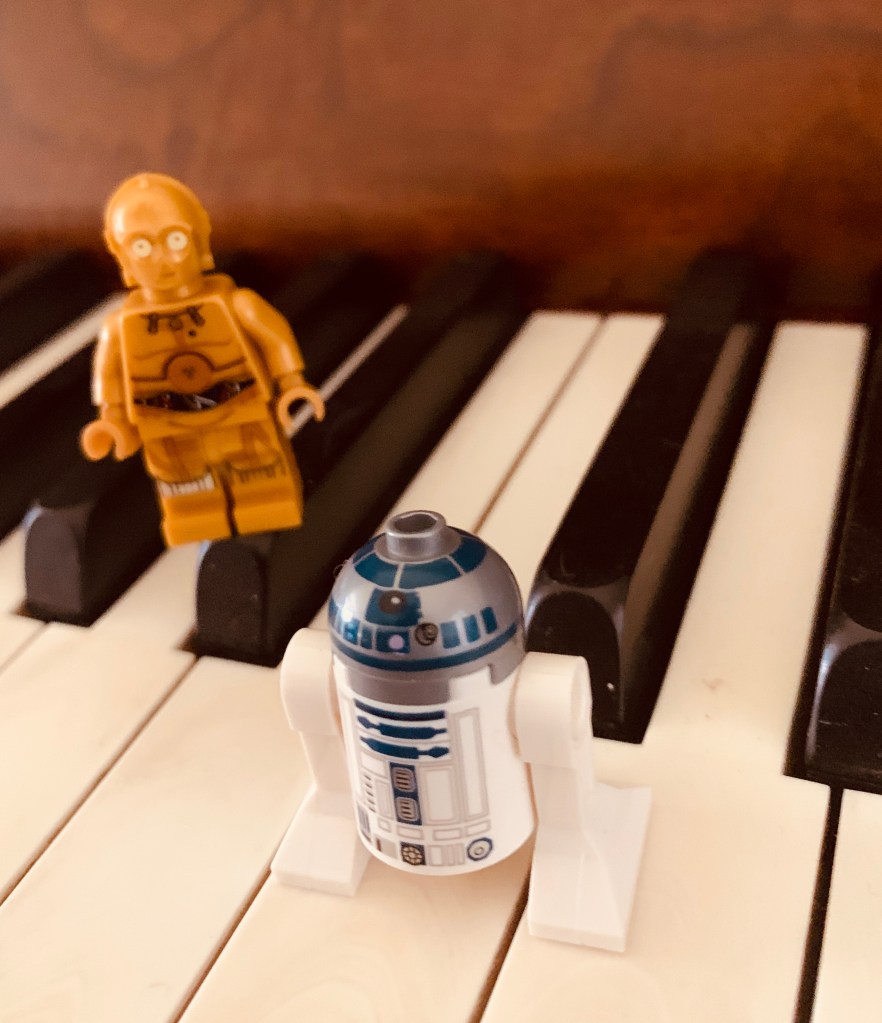
When you hear a tune on the piano you are actually listening to the sound of the strings vibrating back and forth. This vibration produces sound waves, which are longitudinal waves that travel through a medium such as, air and water. It is more easily noticeable on a guitar since you can see the strings vibrating when plucked.

These sound waves can be measured using a variety of different instruments. These instruments count the number of sound waves produced in a second and displays that information as Hertz (Hz), also known as frequency. The human ear can perceive sound from about 20 Hz to 20,000 Hz. The lower the frequency the lower the tone such as bass notes. The higher the frequency, the higher the tone such as, a soprano singer. In western music there are 12 frequencies called notes or tones. After the 12 tones, the notes are repeated at double the frequency. This is called an octave. For example, the note of middle C on the piano vibrates at 261.6 Hz. Its octave, (12 notes above) is also a C vibrating at exactly double the frequency of 523.2 Hz. An 88 key piano spans 7 octaves. Julie Andrews, from the Sound of Music, has a vocal range of 4 octaves.
Did you know, how fast sound travels? Sound travels at about 760 mph. This is much slower than the speed of light, which travels at about 671,000,000 mph. This is why, when you are at a baseball game sitting in the outfield, you see the batter swing and hit the ball and seconds latter you hear the smack of the bat.
 Lego Project